This article is based on insights shared by Dr. Natali Edmonds from Dementia Careblazers.
Dr. Edmonds provides expert guidance on handling dementia-related behaviors with compassion and effective strategies.
Dementia is a challenging condition that affects millions of families worldwide.
One of the most frustrating aspects caregivers face is the repeated questioning by their loved ones.
It’s a behavior that can test anyone’s patience, but understanding the root causes and implementing practical strategies can transform these moments into opportunities for reassurance and connection.
Why Does Repetition Happen in Dementia?
Dementia impacts short-term memory and communication centers in the brain, leading to three primary causes of repeated questioning:
- Memory Glitches – The individual forgets they have already asked the question.
- Anxiety Loops – Repeating the question provides them comfort when they feel uncertain.
- Boredom Blues – Asking questions serves as a way to spark interaction and engagement.
Understanding these underlying causes allows caregivers to respond with empathy rather than frustration.
What to Avoid When Responding to Repetition
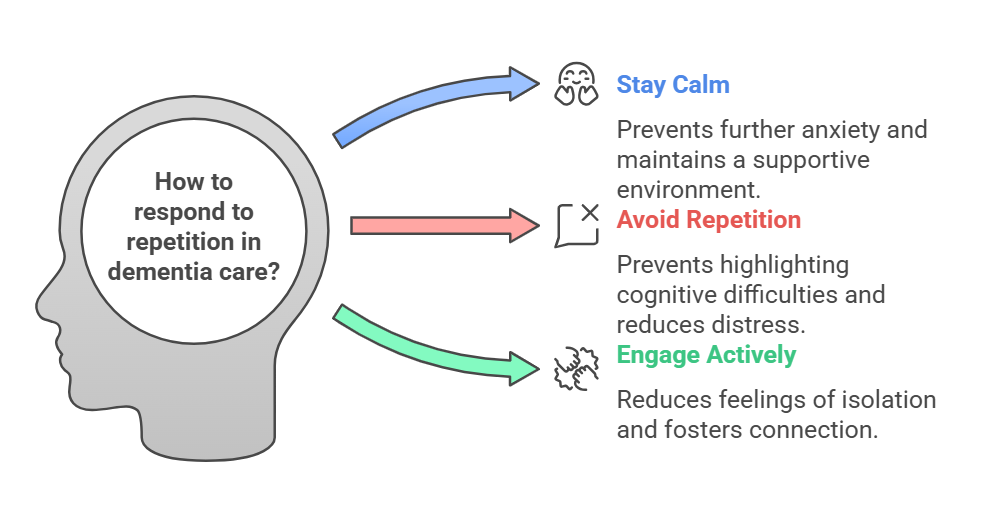
To reduce stress for both the caregiver and the individual with dementia, avoid these common mistakes:
- Snapping or Showing Frustration – Even if it’s difficult, keeping a calm demeanor prevents further anxiety.
- Saying “I Already Told You That” – This only highlights their cognitive difficulties and can lead to more distress.
- Tuning Them Out – Ignoring them can make them feel isolated and alone.
Effective Strategies to Handle Repetitive Questions
Rather than getting frustrated, caregivers can employ these practical techniques, as recommended by Dr. Natali Edmonds:
1. Validate Their Feelings
Acknowledging their concern with phrases like, “This seems important to you. Let’s figure it out together,” can help reduce their anxiety and make them feel heard.
2. Make It a Game
If they repeatedly ask about dinner time, turn it into a guessing game. This lighthearted approach can make the interaction fun rather than frustrating.
3. Create a Reassurance Board
Visual aids, such as writing common answers on a board (e.g., “Dinner is at 6 PM”), can provide reassurance and reduce repetitive questioning.
4. Use the Echo Technique
Repeating their question before providing the answer (e.g., “You want to know when we go to the doctor? We’re going tomorrow morning.”) reinforces understanding and makes them feel acknowledged.
5. Turn It into a Bonding Moment
If they repeatedly talk about their childhood home, engage them in conversation about it. Ask them about their favorite memories to create an emotional connection.
6. Be Proactive
Anticipate common questions and preemptively provide the answers. If they frequently ask about dinner, mention it in passing: “I’m making spaghetti for dinner tonight at 5 PM!”
Keeping Track: The Behavior Journal
One proactive strategy is keeping a behavior journal to track patterns in their repetitive questioning. This can help identify triggers such as:
- Time of day
- Hunger or thirst
- Overstimulation or boredom
By analyzing these patterns, caregivers can adjust routines and responses accordingly.
Final Thoughts
As Dr. Natali Edmonds emphasizes, repetition in dementia is not just a frustrating habit; it’s a symptom of their condition and a request for comfort.
Instead of reacting with frustration, caregivers can use playful, validating, and proactive strategies to create a more positive caregiving experience.
For more information about Dementia Careblazers visit: https://careblazers.com/