
Let’s cut to the chase: is it good to visit someone with dementia?
The short answer is yes, absolutely. But it’s not as simple as showing up with flowers and a smile.
Visiting someone with dementia requires thoughtfulness, patience, and a little bit of know-how.
If you’re asking this question, chances are you care deeply about a loved one living with dementia.
Maybe you’re worried about saying the wrong thing, or you’re not sure how to make the visit meaningful. Don’t sweat it—we’ve got you covered.
Why Visiting Someone With Dementia Matters
Dementia can be isolating. As memory loss and confusion set in, social interaction becomes more challenging.
But here’s the thing: people with dementia still need connection.
Your visit can make a big difference in their quality of life.
Studies show that regular visits can:
- Reduce feelings of loneliness
- Provide mental stimulation
- Help maintain emotional bonds
But let’s be real: visiting someone with dementia isn’t always easy.
They may not remember your name, or they might repeat the same story five times.
That’s okay. It’s not about perfection—it’s about showing up.
How to Make Your Visit Meaningful
1. Keep It Simple and Calm
People with dementia can get overwhelmed by too much activity or noise. When you’re visiting someone with dementia, think “less is more.”
- Use simple sentences. Instead of, “Hey, do you remember that time we went to the beach and built a sandcastle?” try, “I loved our beach trips. The sand was so warm.”
- Pay attention to body language. If they seem agitated, take a step back. Sometimes, a quiet moment together is all they need.
2. Bring the Conversation to Them
Dementia may make it hard for them to recall recent events, but old memories often stick around.
Use items like photo albums or familiar music to stimulate conversation.
- Ask open-ended questions. Instead of, “Do you remember me?” try, “What was your favorite holiday when you were younger?”
- Reminisce together. Sharing stories about the past can be comforting and engaging.
3. Be Patient and Flexible
Living with dementia can be frustrating for the person affected. They may forget what they were saying or struggle to find the right words.
- Give them time to respond. Don’t rush or finish their sentences.
- Be ready to pivot. If they seem upset, change the subject or suggest a calming activity like looking at photos or taking a walk.
What to Avoid When Visiting Someone With Dementia
Let’s face it: even with the best intentions, we can accidentally upset someone with dementia.
Here’s what to steer clear of:
- Correcting them. If they say it’s 1985, just go with it. Arguing can cause distress.
- Overloading them. Too many questions or too much noise can be overwhelming.
- Taking things personally. If they don’t recognize you, it’s not about you—it’s the condition.
How Often Should You Visit?
There’s no one-size-fits-all answer. Some people with dementia thrive on regular visits, while others may find too much social interaction exhausting.
- Start small. Short, frequent visits are often better than long, infrequent ones.
- Ask the caregiver. They’ll have a good sense of what works best for the person you’re visiting.
The Emotional Side of Visiting Someone With Dementia
Let’s be honest: visiting a loved one with dementia can be tough. It’s hard to see someone you care about struggling with memory loss or confusion.
But here’s the silver lining: your presence matters.
Even if they don’t remember your visit, the feeling of being cared for stays with them.
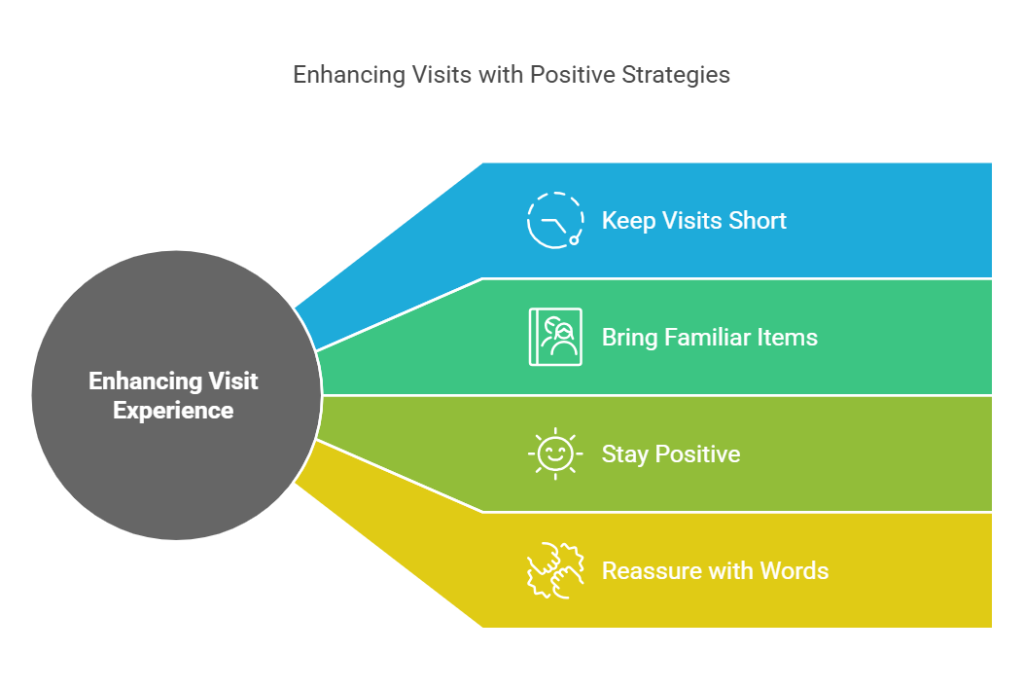
Quick Tips for a Successful Visit
Here’s a handy checklist to keep in mind:
- Keep visits short and sweet. Aim for 20-30 minutes.
- Bring something familiar. Photos, music, or a favorite snack can help spark joy.
- Stay positive. Your energy sets the tone for the visit.
- Reassure them. A simple “I’m so happy to see you” can go a long way.
What If They Don’t Remember You?
This is a common worry. What if your loved one doesn’t recognize you? It’s heartbreaking, but it’s not personal.
- Introduce yourself calmly. Say something like, “Hi, it’s me, Sarah. I’m so glad to see you today.”
- Focus on the moment. Even if they don’t remember your name, they’ll still feel your warmth and kindness.
When to Seek Help
Caring for a person with dementia can be challenging for caregivers and families alike. If you’re feeling overwhelmed, don’t hesitate to ask for help.
- Reach out to a support line. Organizations like the Alzheimer’s Association offer resources and guidance.
- Consider memory care options. As dementia progresses, professional care may become necessary.
The Bottom Line
So, is it good to visit someone with dementia? Absolutely. Your visits can bring comfort, joy, and a sense of connection to someone living with the condition.
It’s not always easy, but it’s always worth it.
Whether you’re visiting a loved one with dementia for the first time or the hundredth, remember: it’s the little moments that count.
FAQs About Visiting Someone With Dementia
Q: How do I know if I’m visiting a dementia patient too much?
A: Watch for signs of fatigue or agitation. If they seem overwhelmed, shorten your visits or space them out.
Q: What if my loved one gets upset during my visit?
A: Stay calm and reassuring. Change the subject or suggest a calming activity like listening to music.
Q: Can social interaction help people with dementia?
A: Yes! Social interaction can improve mood, reduce agitation, and provide mental stimulation.
Final Thought
Visiting someone with dementia isn’t just about what you say or do—it’s about showing up.
Your presence can make a world of difference, even on the hardest days. So go ahead, plan that visit. You’ve got this.